Calculating Sitting Height
Sitting height is not a universal figure. It depends on the user's lower leg length (from floor to the underside of the knee when seated), shoe heel height, and whether a footrest is used. The standard reference calculation is:
- Measure lower leg length (floor to popliteal fold) while seated in socks
- The correct desk height equals that measurement ± the difference from heel height
- For most Czech adults — average male 180 cm, average female 167 cm — sitting desk height falls between 68 cm and 76 cm
At the correct height, the upper arms hang vertically from the shoulders, the elbows are at approximately 90°, and the forearms rest roughly parallel to the desk surface with wrists in a neutral (neither flexed nor extended) position. Keyboard trays that position the keyboard slightly below desk surface level can maintain this neutral wrist angle even if the desk itself is set slightly higher than ideal.
Calculating Standing Height
Standing height follows the same elbow-angle principle. Stand in the shoes typically worn while working. Raise the desk until the elbows reach 90° with hands resting on the surface. For most users, standing height runs 20–30 cm above sitting height. Electric sit-stand desks with memory presets (common in models from FlexiSpot, Linak-actuator units sold across Central Europe) allow both positions to be saved and recalled with a single button press.
A common error is setting the standing height too high — users who raise the desk to shoulder-height-plus find their elbows elevated and their trapezius muscles constantly contracted. The goal is the same neutral elbow-angle as when seated.
Monitor Position at Two Heights
A monitor on a fixed stand cannot be correctly positioned for both sitting and standing without a monitor arm. At sitting height, the top of the screen should align with eye level (some sources cite slightly below eye level for bifocal users). When the desk rises to standing position, the same monitor on a fixed stand will now be below eye level, causing the head to tilt forward — precisely the posture that height-adjustable desks are intended to prevent.
A gas-spring or electrically adjustable monitor arm that moves independently of the desk surface resolves this. Monitor arms with a vertical travel range of at least 20 cm (most gas-spring arms offer 15–25 cm) allow the screen to track eye level through the full sit-to-stand range.

Sit-Stand Transition Schedules
The occupational health evidence on sit-stand schedules is more nuanced than popular advice suggests. A 2018 systematic review in BMJ Open found that brief standing breaks every 30–60 minutes reduced lower back discomfort compared with continuous sitting, but that prolonged standing (90+ minutes without movement) increased lower limb fatigue and discomfort in a proportion of participants.
Current practical guidance from occupational medicine (including Czech BOZP guidance on sedentary work under zákon č. 309/2006 Sb.) suggests:
- No more than 50 minutes of continuous sitting without a movement break
- Standing periods of 20–40 minutes at a time, interspersed with sitting
- Total standing time of 2–4 hours across an 8-hour workday as a realistic target for those new to sit-stand working
- An anti-fatigue mat under the standing position if the floor is hard (concrete or tile subflooring, common in Czech panel buildings)
The temptation to stand for long unbroken periods in the first weeks is common and counterproductive — it typically results in lower limb ache and a return to sitting full-time. A graduated approach starting with two 20-minute standing periods per day and increasing over several weeks is more sustainable.
Timer Tools
Many sit-stand desk controllers include reminder timers. Where they do not, OS-level interval reminders (Windows 11 Focus Sessions, macOS Time Out, or simple recurring calendar alerts) function identically. The specific tool is less important than the regularity of the prompt.
Cable Management
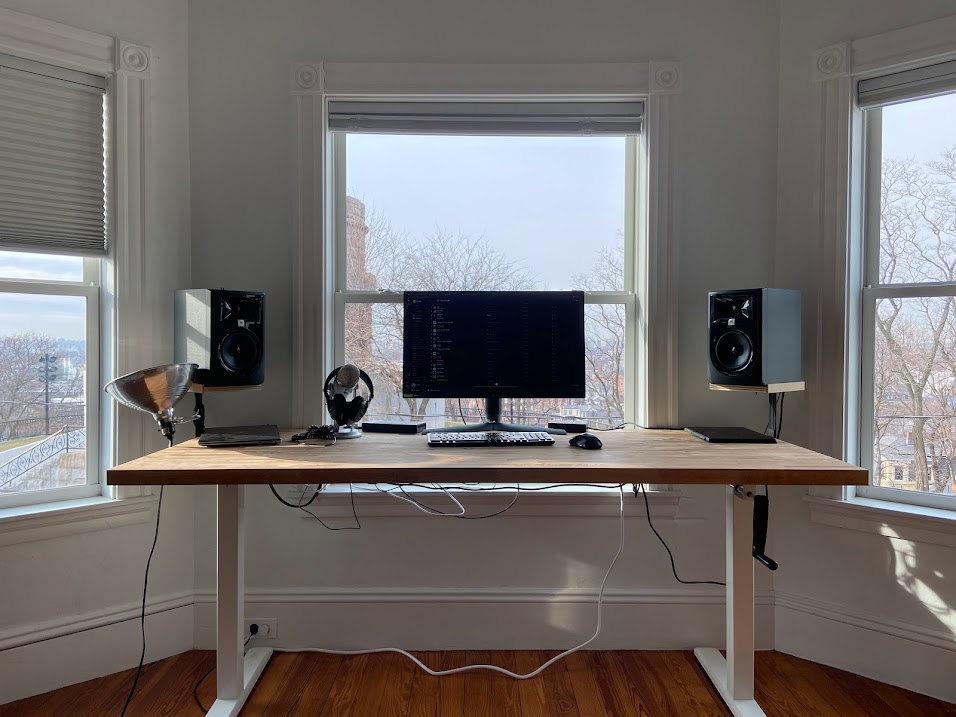
A sit-stand desk with a monitor, laptop, external keyboard, and one or two peripherals will cycle a cable bundle through 25–30 cm of vertical movement hundreds of times over a year. Cables that run directly to wall sockets or are fixed to the desk frame will pull taut at one height extreme or accumulate slack at the other.
The practical solution is a cable spine or cable track attached to the desk leg that moves with the desk, combined with a cable tray under the desk surface and sufficient cable slack to accommodate the full travel range. This prevents cable fatigue fractures over time and eliminates the visual disorder that discourages users from actually adjusting the desk.
Desk Depth and Surface Area
Standard sit-stand desks are sold in depths of 60 cm and 80 cm. For a single monitor, 60 cm depth places the screen at the correct viewing distance (50–70 cm from the eye to the screen surface). For dual monitors or users with large displays (27"–32"), 80 cm depth is preferred. Czech apartment rooms typically allow either, though the difference in footprint may be relevant in rooms under 12 m².
Width options commonly start at 120 cm. For a typical home office setup with a monitor, laptop stand, and minimal desk accessories, 140 cm provides comfortable working width without wasted space.
Frame Quality and Stability
At standing height, a desk frame with insufficient cross-bracing will exhibit noticeable wobble during typing. This is disproportionately common in single-motor frames, which use one actuator to drive both legs. Dual-motor frames with independent leg feedback provide better stability across the height range, particularly at maximum height (typically 120–130 cm on consumer models).
The Linak Deskline and Logicdata systems used in mid-to-high range models (available from Czech distributors including Steh-sitz.cz and ergonomické kancelářské vybavení distributors in Praha, Brno, and Ostrava) are widely regarded as reliable reference options. Frame stability at full standing height is best assessed in person.
Last updated: 1 May 2026. References: ČSN EN 527-1:2011 (office furniture desk dimensions), zákon č. 309/2006 Sb. (occupational health and safety).